Background and Engagement
After receiving my primary and secondary education at
The King’s School, Canterbury, I trained as a
Germanist at University College London (BA Honours) under Elizabeth
M. Wilkinson, at the University of Alberta (MA) under Alison
Scott-Prelorentzos and Milan V. Dimič, and as a professional
translator/interpreter (Fellow of the Chartered Institute of
Linguists). I also completed my secondary teacher training at St Mary's College London (BEd). I then acquired a lifetime of experience as an
intelligence linguist and communications specialist, which included
first-hand knowledge of the Middle East, and which culminated in my
doctoral work on Persia (Iran) at Simon Fraser University under the
diplomatic and intelligence historian André Gerolymatos and at the
University of South Africa (DLitt et Phil) under the military
historians Tilman Dedering (UNISA) and Ian van der Waag
(Stellenbosch).
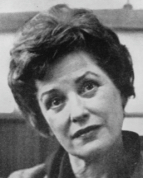 As a young undergrad at UCL, my (propter Cantuariam) Anglican Weltanschauung was radically transfigured by the late Professor Wilkinson's brilliant lectures and lively seminars on the Age of Goethe (ca 1770–1830). Listening to this great scholar's holistic interpretation of eighteenth and nineteenth-century German cultural history—from Aufklärung to Romantik—was an intellectually exhilarating experience. 'The Wilk's' multidisciplinary view—she herself began university as a BSc Biology student—of such Goethean concepts as Polarität and Steigerung informed and changed my perspective on so much more than just German literature and philosophy. Deeply influential, her ideas truly rocked my world and set me on a favoured path that led to my abiding love of German literature and ultimately to my Quakerly worldview, from which I continue to derive great strength of spirit.
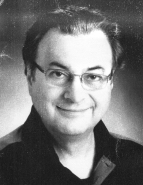 Much much later in life, after performing many different roles, some in the secret world, I was equally fortunate to encounter the late Greek-Canadian historian and author Professor André Gerolymatos, who invited me to become his editorial and research assistant while undertaking a PhD in Intelligence History. From André I learned, quite simply, how to write History. I watched him operate as an academic and public historian: teaching (mostly in the Socratic way), writing his fascinating books on Greek, Balkan, and Middle Eastern history, working tirelessly to promote Hellenic Studies as an academic discipline, appearing on radio and television as an expert on international affairs and on terrorism. On his behalf I travelled abroad to read in the British and American archives, which taught me how to conduct similar investigations in my own special field of Middle Eastern intelligence history. It was not easy to change academic disciplines from Germanistik to History late in life, for by now I was nearly 70—ten years older than my mentor! However, André Gerolymatos enabled me to make the transition smoothly. He helped me combine and capitalise on my experiential knowledge of German history and culture, the German language, the Middle East, and the secret world of many operational things best left unspoken. He saw in me the potential historian whom I alone could never have imagined.
Twice before in my eventful (!) life, I had begun
and abandoned doctoral studies: in 1969 in Comparative Educational Philosophy at the
University of Alberta under Bernal Walker, and in 1999 in German Literature at the
University of Cambridge under Roger Paulin. Unfortunately, while scholastically promising,
both attempts were torpedoed by adverse personal circumstances. So, my
ultimate achievement of a History doctorate at age 72 was a
third-time-lucky event!
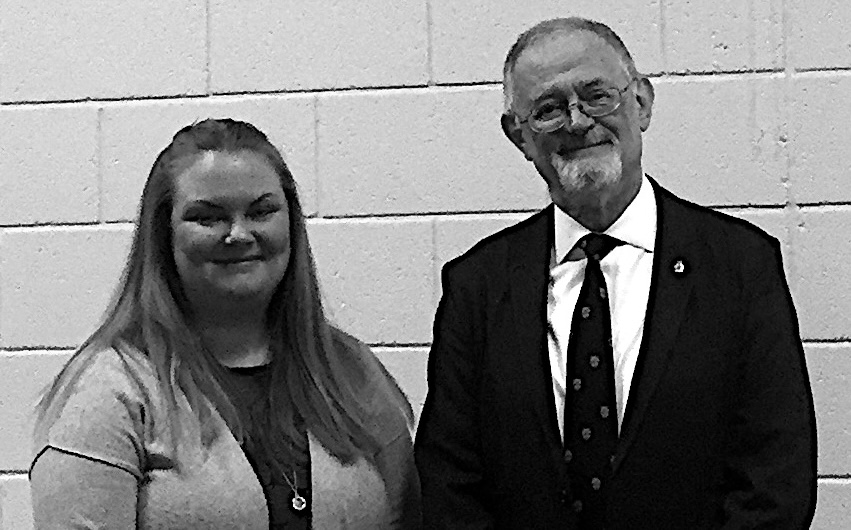 Before joining Bishop Grosseteste University (now Lincoln Bishop
University) in August 2021 as Honorary Professor of Intelligence
History, I had been participating in a productive research
and writing partnership with Dr Claire Hubbard-Hall, who was then Senior
Lecturer in History and is now Honorary Associate Professor of
Intelligence History at LBU. Together we had been engaged for several
years in dynamic joint investigations into a wide range of covert
organisations, operations, and activities in the global context of the
wartime secret services, both Allied and Axis, often using techniques
derived from such ancillary disciplines as social history and geospatial
studies. Now working together in affiliation with LBU, the future looks
bright for us, with at least two full-length co-authored monographs currently
in production and several other cooperative ventures at the research
stage.
Before joining Bishop Grosseteste University (now Lincoln Bishop
University) in August 2021 as Honorary Professor of Intelligence
History, I had been participating in a productive research
and writing partnership with Dr Claire Hubbard-Hall, who was then Senior
Lecturer in History and is now Honorary Associate Professor of
Intelligence History at LBU. Together we had been engaged for several
years in dynamic joint investigations into a wide range of covert
organisations, operations, and activities in the global context of the
wartime secret services, both Allied and Axis, often using techniques
derived from such ancillary disciplines as social history and geospatial
studies. Now working together in affiliation with LBU, the future looks
bright for us, with at least two full-length co-authored monographs currently
in production and several other cooperative ventures at the research
stage.
While now semi-retired—writing but no longer lecturing—I remain professionally engaged through my membership in the following organizations: The Royal Historical Society, The Royal Asiatic Society of Great Britain and Ireland, The Irish Association of Professional Historians, and The Second World War Research Group, North America.